
Journal · The production
Cinematic music: scoring emotion, not scenes
Run a simple test: take any scene you love, mute it, and play it against two different pieces of music. With one, the farewell at the train station is hopeful - a beginning. With the other, it is a funeral. Nothing on screen changed. That is the strange power of cinematic music: it doesn’t describe what you are seeing, it decides what you are feeling. Which is why the composer’s real job is never to score the scene. It is to score the emotion underneath it.
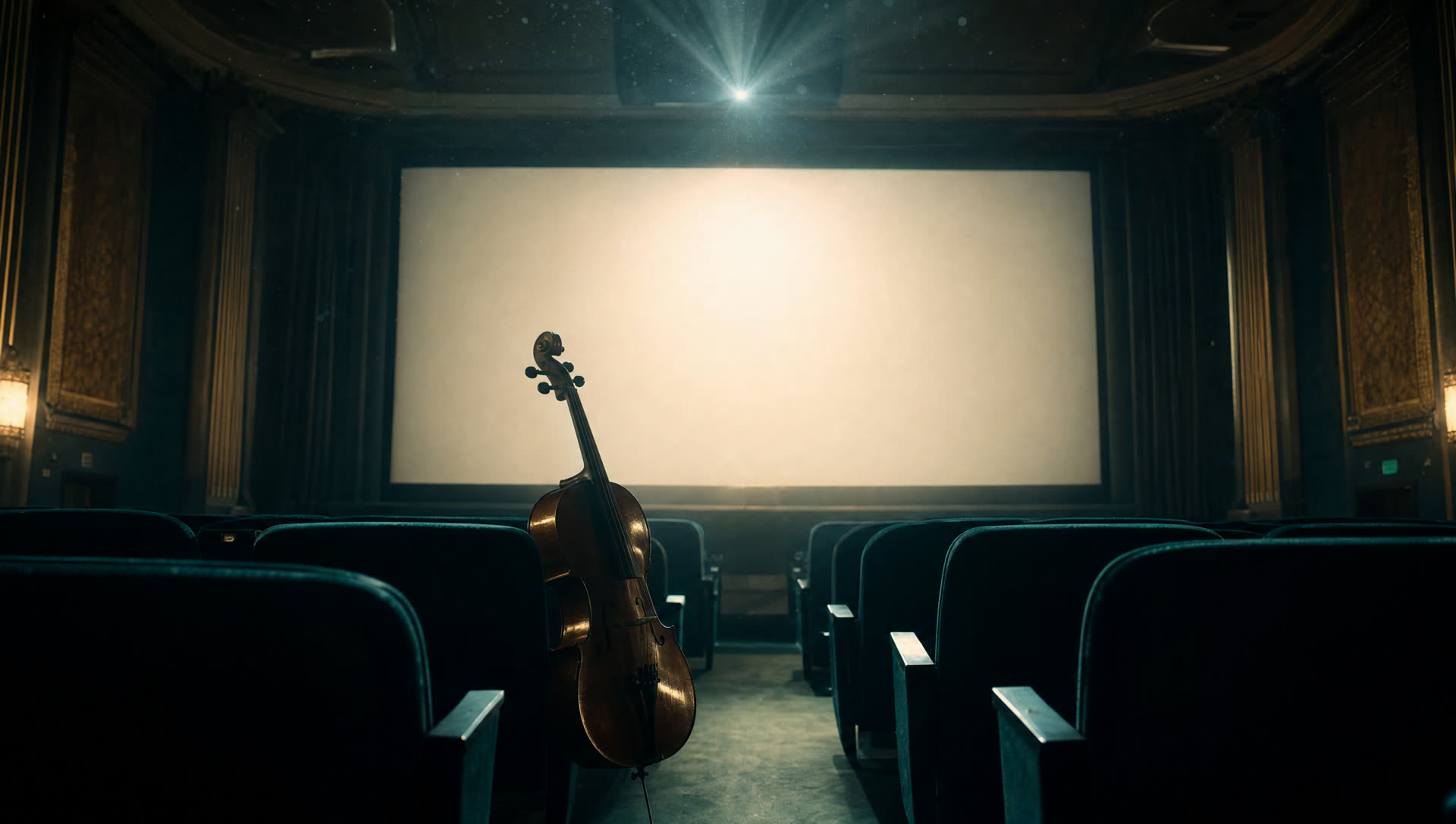
The scene you watch and the scene you feel
Pictures are information; music is interpretation. An audience watches a woman pack a suitcase - the score tells them whether she is escaping or being abandoned. This is not decoration, it is narration by other means, and audiences receive it without ever noticing: sound reaches the brain’s emotional centers before conscious analysis begins. Music is the difference between a scene people watch and a scene they feel - and everything in the work serves that difference.
Tension and release: the engine
Underneath every effective cue is one mechanism: tension and release. Harmony leans away from home and the listener’s body leans with it; the chord resolves and something in the chest lets go. A composer controls exactly how long to withhold that resolution. Hold it a little too long - deliberately - and an audience will feel dread without a single scary image on screen. Give it early and generously, and even an ordinary image glows. Suspensions, pedal tones, a melody that keeps almost arriving: these are the levers, and the audience never sees the hand on them.
Time and the heartbeat
Tempo is the most physical tool in the kit, because listeners entrain to it - pulse, breath, and attention sync to a beat without permission. This is why a ticking pattern under a scene shortens everyone’s breath, a trick Hans Zimmer turned into an entire language in Dunkirk with a recording of a real watch. Slow the pulse below a resting heartbeat and the room calms; push it above and palms sweat. When I write, tempo is chosen the way a director chooses a lens: not for the music’s sake, but for what it does to the body watching.
Themes: the melody people carry home
A theme - a leitmotif, in the old Wagnerian word - is a melody bound to a character or an idea, and it is the score’s long game. Play it under the hero’s first small victory, and its return two hours later, slower and in a darker key, can carry the entire weight of what has been lost since. It works because the melody has become memory: hearing it again is remembering. This is exactly the mechanism a brand borrows in sonic branding - a musical idea that accrues meaning every time it returns.
How to brief emotion: a director’s cheat sheet
If you are a director, producer, or brand lead who needs to communicate a feeling to a composer, here is the vocabulary that actually works - none of it musical. Describe the before and after: what does the audience believe walking into this scene, and what must they believe walking out? The music’s job is that distance. Name the resistance: the most interesting cues play against something - grief resisting comfort, hope resisting evidence; tell me what the feeling is fighting and the harmony writes itself. Give me the moment of maximum meaning: every scene has one frame that matters most, and the entire cue will be secretly built to arrive there. Use memories, not genres: “like the last day of summer when you’re ten” is a better brief than “emotional orchestral,” because it contains temperature, tempo, and loss in one image. And trust the difference between big and deep: louder is not more moving, and the request “make it more epic” usually means “make me care more” - which is almost always solved by going smaller first.
Silence is a note
The least understood tool in cinematic music is the absence of it. After twenty minutes of score, four seconds of true silence is deafening - the musical equivalent of a held breath. When I composed the 15-minute score for the Fanal exhibition, the breakdowns were treated as carefully as the climaxes: space for the visitor to stand alone with a photograph before the strings return. Music earns its power from the moments it steps away.
The composer’s toolkit, decoded
Beyond tension and tempo sit the quieter dials, and audiences feel every one of them without knowing their names. Register: the same melody an octave lower stops being wistful and becomes a warning - height in pitch reads as hope, depth as threat, and the space between them as scale. Instrumentation as casting: a solo cello is a confession, a French horn is memory and distance, a boys’ choir is innocence about to be tested; choosing the instrument is choosing the actor who delivers the line. Harmony’s vocabulary: major and minor are only the alphabet - suspended chords hold the heart mid-air, added seconds blur sweetness with ache, and a single borrowed chord can make sunlight feel like remembering. Dynamics as camera: a crescendo is a slow push-in, a sudden drop to pianissimo is a cut to close-up. When people say a score is “manipulative,” they mean these dials were turned clumsily enough to be noticed. The skill is turning them so the audience believes the feeling was theirs all along - because by the time it lands, it is.
Three famous cues that prove the point
Listen to how the masters run the machine. Jaws: two notes, a semitone apart, accelerating - no shark for most of the film, yet total dread, because tension-and-release can run on the smallest possible material when the timing is merciless. Up’s “Married Life”: one waltz theme carries an entire marriage in four minutes - bright and dancing at the wedding, thinner and slower through the losses, finally played alone and incomplete; that is the leitmotif’s long game compressed into a masterclass. Interstellar’s docking scene: a church organ - the sound of the sacred - driven over a relentless ticking pulse, eternity and a countdown in the same bar; the scene is impossible physics, but the music makes your body believe the stakes. Three different films, one shared truth: in every case the music is not describing the picture. It is supplying the meaning the picture cannot state.
Scoring emotion in practice
All of this is why, in my studio, every score begins as a solo piano sketch - emotion has to work with one instrument before it earns an orchestra (the full process is in how a custom score gets made). It is also why the brief I ask for is emotional, not technical. For the Jacquemus film there was no dialogue at all; the entire arc - restlessness, longing, the quiet thrill of morning - had to live in the music. Nobody asked for “strings at 92 BPM.” They asked for a sleepless night that ends in sunlight. That is a scene you can’t score. But the feeling underneath it - that, you can.