
Journal · The production
How a custom score gets made, from first call to final master
Commissioning music sounds intimidating from the outside - like ordering a building. In practice it is a short, structured collaboration with exactly two moments where your input changes everything, and a professional handling the rest. Here is the whole process as it actually runs in my studio, so you know what happens after you press send on that first message.
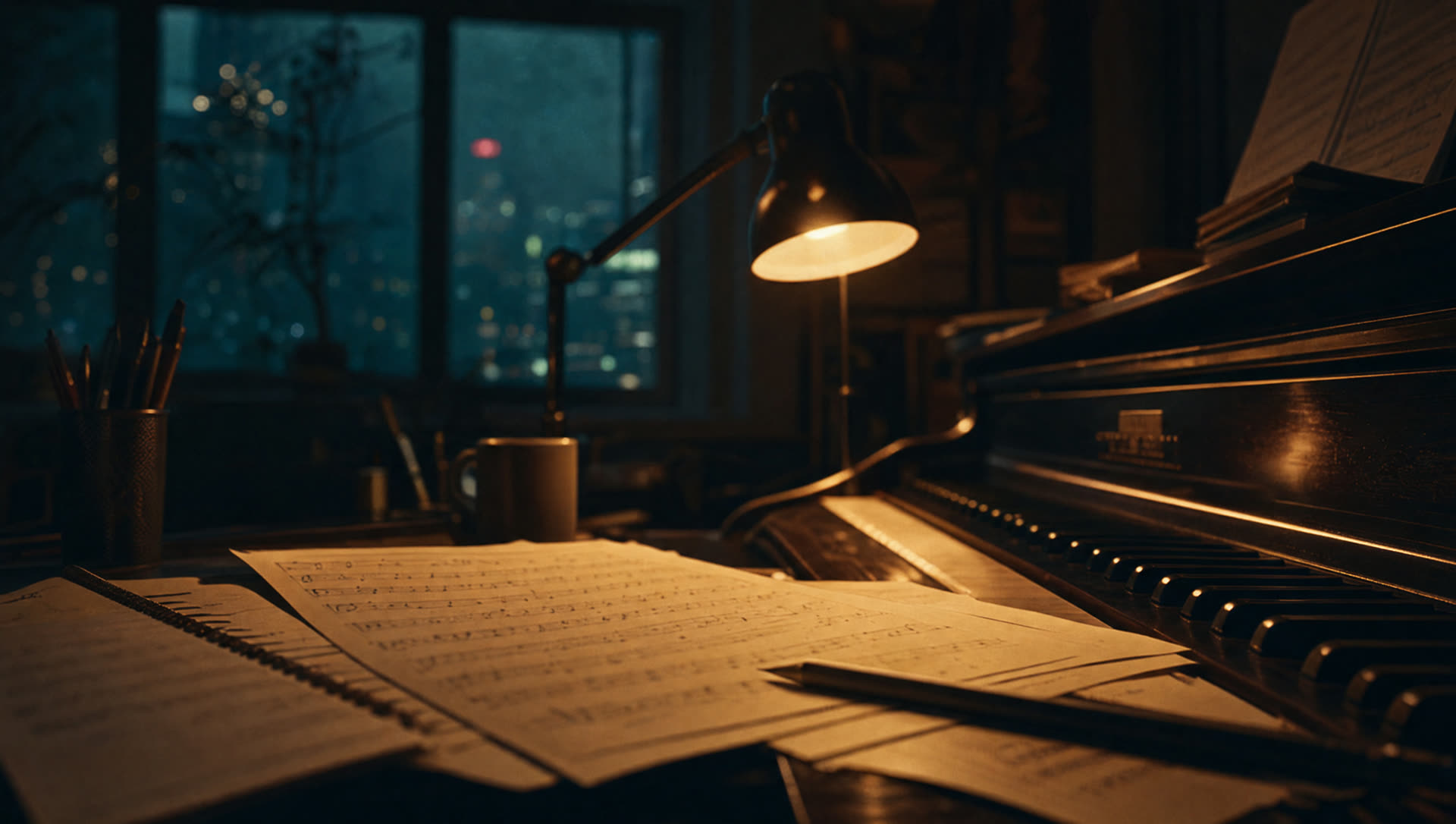
1. The conversation
Everything starts with a brief - but not the kind with tempo markings. What I need from you is the story: what the film or campaign is about, who it is for, what the audience should feel at the end, and when you need it. References help enormously, and they do not have to be musical; “it should feel like the last scene of that film” is often more useful than a playlist. Deadlines and budget belong in this conversation too, because both shape the approach honestly - a score is scoped on length, orchestration, and usage rights, and knowing the frame early means no surprises later.
2. The piano sketch
This is the moment most clients don’t expect. Before any orchestration or production, the entire piece is written as a solo piano sketch. Why: emotion has to survive naked. If the melody and the harmonic arc don’t move you with one instrument, no amount of strings and sound design will fix it - they will only decorate the problem. The sketch is also where changing direction costs almost nothing. We lock the emotional shape here, together, which is why my projects almost never need the dreaded round five of revisions later.
3. Building the world
With the sketch approved, the piece gets its body. Orchestration decides who carries the melody - strings, brass, woodwinds, choir. Production decides the floor and the ceiling - sub-bass movement, air, texture, the electronic layer that makes a modern score feel current (I’ve written about that blend in hybrid orchestral scoring). And where the project allows it, this is where the sound becomes literally yours: for TARO ISHIDA I recorded the brand’s own heel strike and built it into the percussion. If there is picture, the music is written to the frame - hits landing on cuts, the theme resolving on your final image.
4. The review rounds
You hear the piece at two structured moments: the sketch (emotional direction) and the produced draft (the full world). Feedback works best in the language of story and feeling - “the middle should ache more,” “the ending needs more sunrise” - and it is my job to translate that into harmony, tempo, and arrangement. Because the direction was locked at the sketch, revisions at this stage are refinements, not rebuilds.
5. Finishing: mix and master
A score is not done when it is written; it is done when it translates - on cinema speakers, on a laptop, on the phone where most of your audience will actually meet it. I mix and master everything myself, in the same studio where it was composed, so nothing is lost in a handoff between writer and engineer. One vision, first note to final master.
6. Delivery and rights
You receive the finished master in every format the project needs - plus, where useful, stems (separated instrument groups) so your editors can duck the music under dialogue, and cutdowns for 30s, 15s, and 6s versions. Usage rights are agreed in plain language up front; for brand work, exclusivity is standard, meaning the music can never appear anywhere but under your name. That exclusivity is a large part of why custom music outperforms stock - a comparison I’ve made honestly in custom music vs. library music.
How long does it take - and what decides the cost?
A single brand cue is typically ready in one to three weeks. Campaigns and films scale with scope, and a real deadline is always answerable with a straight yes or no at the first conversation. Cost follows three dials, and knowing them makes every proposal legible: length and quantity (one 30-second cue, or a campaign suite with cutdowns), production depth (a programmed hybrid score, or sessions with recorded players), and usage rights (a single web film, or worldwide exclusivity across all media for years). Move any dial and the number moves with it - which is why an honest budget conversation at the start produces a better score than a mysterious one at the end. For a sense of market ranges across the industry, I have collected them in custom music vs. library music and the sonic branding guide.
What to prepare before you reach out
You need less than you think - but five things make the first conversation ten times more productive. The story: what this project is, in the language you would use to a friend. The feeling: what the audience should walk away with; one honest sentence beats a mood board. The deadline: real dates, including internal review rounds. References, loosely held: two or three things that feel right - films, songs, even a photograph - offered as direction, not specification. And the frame: a budget range and where the music will live (web, broadcast, cinema, retail), because rights shape the writing. What you do not need: musical vocabulary, tempo preferences, or instrument lists. Translating feeling into orchestration is the part you are hiring.
The mistakes that cost projects money
After enough commissions, the failure patterns are predictable - and all of them are avoidable. Briefing in genres instead of feelings: “epic orchestral” describes a thousand scores; “the moment before you open the letter” describes yours. Skipping the sketch stage: approving emotional direction on the piano sketch is what makes later revisions cheap; skipping it to save a week usually costs three. Locking music before picture: if the edit is still moving, score the locked sections first - rewriting to a re-cut is the most expensive kind of writing. Leaving rights vague: “we’ll sort usage later” is how a web-only budget meets a broadcast campaign. And feedback by committee: five stakeholders with five adjectives produce a score with none; appoint one voice to carry the room’s decision.
After delivery: the life of a score
A well-commissioned score does not end at delivery - it starts working. The master carries the campaign; the stems let editors reshape it under new cuts for months without ever calling me; the cutdowns feed every placement from cinema to a six-second bumper. And if the work was scoped as identity rather than one-off, the theme becomes raw material: next season’s campaign can rework the same musical DNA - new tempo, new instrumentation, same recognizable soul - so the brand’s sound compounds instead of resetting to zero with every agency change. This is the quiet difference between buying music and building an asset: a year later, the one-off is a file in a folder, while the identity has been heard a million times and grown more valuable with each one. It is also why the rights conversation at the start matters so much - everything this paragraph describes assumes the music is exclusively, permanently yours to use.
Frequently asked questions
How many revisions are included?
Feedback happens at two structured moments - the piano sketch and the produced draft - and because emotional direction is locked at the sketch, later revisions are refinements rather than rebuilds. Most projects never need more; the rounds are agreed in the proposal so there are no surprises.
Do I get stems and cutdowns?
Yes, where the project needs them: separated instrument groups so editors can duck music under dialogue, plus 30, 15, and 6 second versions for campaign placements. Deliverables are listed in the proposal.
Can you work from a temp track?
Yes - as direction, not as a target to clone. A temp tells me what the edit already believes about tempo and energy. The goal is music that does what the temp did for you emotionally, while being legally and creatively yours.
What if I don’t know anything about music?
Perfect - you are the ideal client. The brief I need is story and feeling in your own words. Translating that into harmony, tempo, and orchestration is my half of the table.