
Journal · Film scoring
The role of hybrid orchestral music in modern film scoring
Listen to the biggest scores of the last fifteen years and a pattern emerges: the orchestra is still there, but it is no longer alone. Underneath the strings sits a synthesizer pad; inside the percussion lives a processed heartbeat; the brass has been run through gear that makes it feel less like a section and more like a force of nature. This is hybrid orchestral music - the marriage of the concert hall and the machine - and it has quietly become the default language of modern cinema.
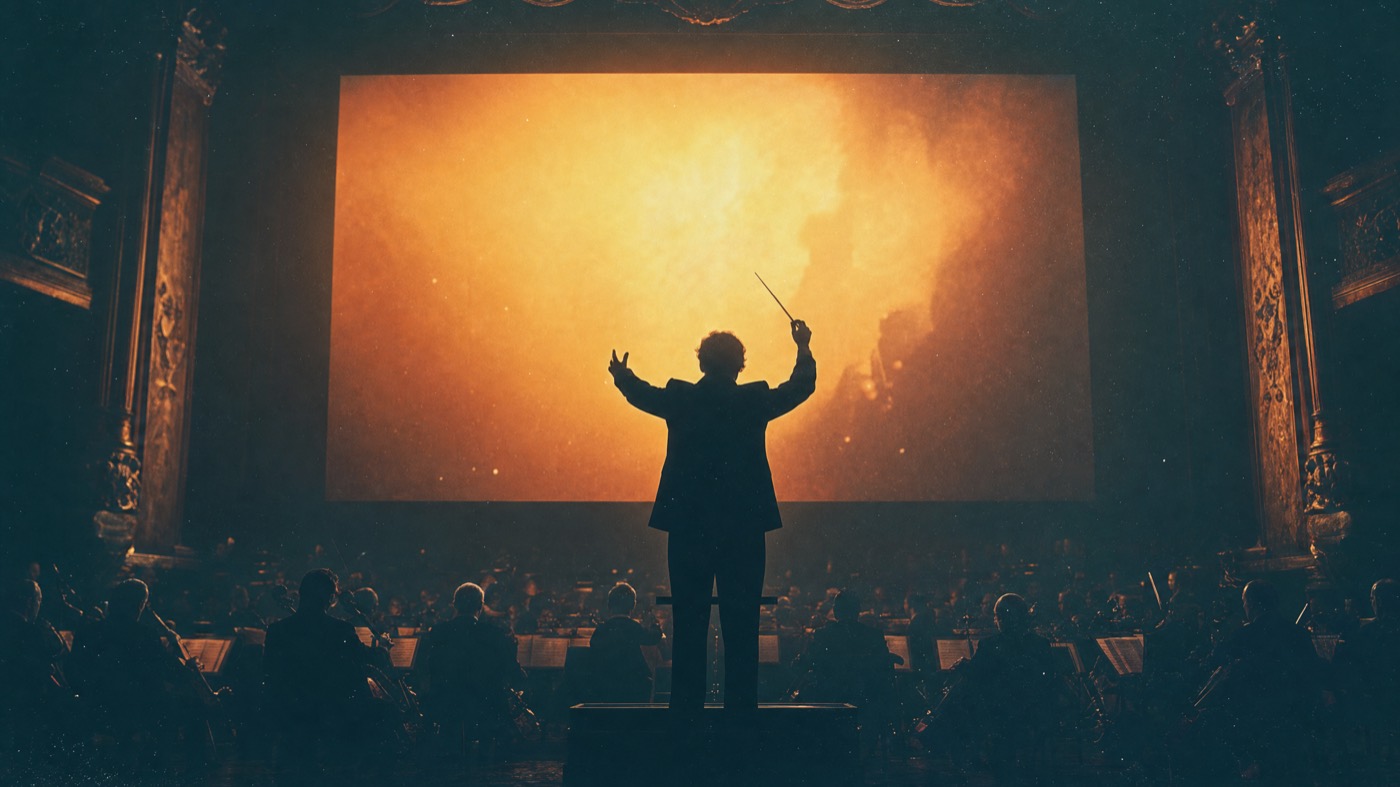
What hybrid scoring actually is
At its simplest, a hybrid score combines traditional orchestral elements - strings, brass, woodwinds, choir - with electronic production: synthesizers, sound design, processed textures, and programmed percussion. But the definition undersells the artistry. A good hybrid score is not an orchestra with a synth on top. It is a single, unified sound in which you often cannot tell where the cello ends and the processing begins.
That ambiguity is the point. The orchestra carries centuries of emotional association - warmth, humanity, scale. Electronics carry the present: tension, modernity, the texture of machines and cities. Blending them lets a composer speak both languages in the same phrase.
How we got here
The seeds were planted decades ago - Vangelis scoring Blade Runner almost entirely on synthesizers in 1982, Hans Zimmer fusing orchestra and electronics through the nineties. But the last decade turned an approach into an era. Zimmer's Interstellar built cathedrals from a pipe organ and analog synths; Dunkirk turned a ticking watch into a percussion section. Junkie XL gave Mad Max: Fury Road an engine-roar of taiko drums and distorted guitars fused with a ninety-piece orchestra. Ludwig Göransson won Oscars by recording orchestras and then treating them like electronic source material - Black Panther, Oppenheimer - bending acoustic performances until they sound like nothing an orchestra could do alone, yet feel like everything an orchestra means.
The lesson from all of them: the technology never replaced the orchestra. It extended it.
Why directors and brands keep asking for it
Hybrid scores dominate for practical reasons as much as artistic ones. They scale - the same musical DNA can whisper in an intimate scene and detonate in a trailer. They cut through modern sound mixes, where pure orchestral recordings can drown under dialogue and effects. And they age well: a purely electronic score sounds like the year it was made, while the orchestral spine underneath a hybrid score keeps it timeless.
There is also an emotional mechanic at work. Audiences raised on cinema associate strings with feeling; audiences raised on electronic music associate synthesis with energy. A hybrid score reaches both instincts at once - which is why it works as well for a luxury brand film as for a superhero trailer.
How a hybrid score is actually built
In my own studio the process starts acoustically: every score begins as a piano sketch, because emotion has to survive on its own before any production dresses it (the full journey is in how a custom score gets made). From there the layers are deliberate. Orchestral sections carry the melody and the harmony - the parts an audience will hum. Electronics take the floor and the ceiling: sub-bass movement below, air and shimmer above. Percussion is usually a hybrid within the hybrid - real drums layered with designed impacts, sometimes with found sound. For one sonic-branding client I built the entire kick drum from a recording of their own product; the audience never knows, but they feel that the sound belongs to the brand.
The last step is cohesion - running disparate elements through shared processing, the same room, the same analog chain, so the score reads as one world rather than a stack of tracks. Restraint matters more than firepower: the most common failure in hybrid writing is using everything at once. The orchestra earns the electronics, and the electronics earn the orchestra.
Five hybrid scores to study
The fastest education in this language is a listening list. Blade Runner 2049 (Zimmer & Wallfisch): listen for how synthesis carries the film’s loneliness while the orchestra is held back like a memory of an older world. Interstellar (Zimmer): the pipe organ as the bridge - an acoustic instrument that behaves like a synthesizer, sacred and mechanical at once. Mad Max: Fury Road (Junkie XL): maximal fusion, taiko and distorted guitars welded to a ninety-piece orchestra, proof the blend can be pure adrenaline. Oppenheimer (Göransson): strings recorded acoustically, then bent, detuned, and accelerated until performance and processing are inseparable - the current state of the art. And The Social Network (Reznor & Ross): the quiet end of the spectrum, where a single piano sits inside an electronic haze and redefined what a “small” hybrid score could do. Five films, five completely different answers, one shared grammar.
Inside a hybrid session: what’s actually in the template
Strip the mystique and a hybrid scoring session is a beautifully organized argument between two centuries. The orchestral half: strings in sections and solos, brass for weight, woodwinds for air, often a choir - some of it recorded live, some played from meticulously sampled libraries that took years to record. The electronic half: analog and software synthesizers for the low-end floor and the shimmering ceiling, designed percussion and impacts, and processed textures - which is where the real alchemy happens. A cello phrase reversed and stretched into a pad; a piano recorded, granulated, and turned into weather; a heartbeat pitched down until it becomes a war drum. The final ingredient is shared space: routing both worlds through the same reverbs and the same analog chain so the ear cannot find the seam. The most common beginner mistake is treating the halves as layers to stack; the skill is composing them as one instrument, where the synth needs the cello’s humanity and the cello needs the synth’s floor.
Why brands ask for hybrid too
This language long ago escaped the cinema. Brands commission hybrid scores for the same reason directors do: the orchestral spine signals heritage, artistry, and scale, while the electronic layer signals now - and most brands need to say both things at once. A luxury house wants the weight of tradition without sounding like a museum; a technology brand wants the future without sounding cold. The blend is the message. It is the language I used for Jacquemus - chamber strings and piano carrying a designed, produced world - and it is why hybrid writing has quietly become the default request in premium sonic branding, not just in film.
Where it goes next
The frontier now is adaptivity - scores that respond in real time to picture, games, and interactive media, which only a hybrid workflow can deliver. And as generative tools enter the studio (I’ve written a full, honest deep dive on that in AI and music), the same principle will decide who thrives: the technology extends the artistry, it does not replace it. The composers who win the next decade will be the ones who can walk into both rooms - the scoring stage and the synth lab - and make them sound like one place.