
Journal · The production
Mixing vs. mastering: the difference, the cost, and what you actually need
No two words in music production cause more confusion, more forum arguments, or more quietly wasted money. Artists pay for mastering when their problem is the mix; brands receive a “final master” that was never mixed at all; and the internet keeps selling both words as magic. The actual distinction fits in one sentence - mixing makes the instruments sound good together, mastering makes the song sound good everywhere - and everything practical follows from it.
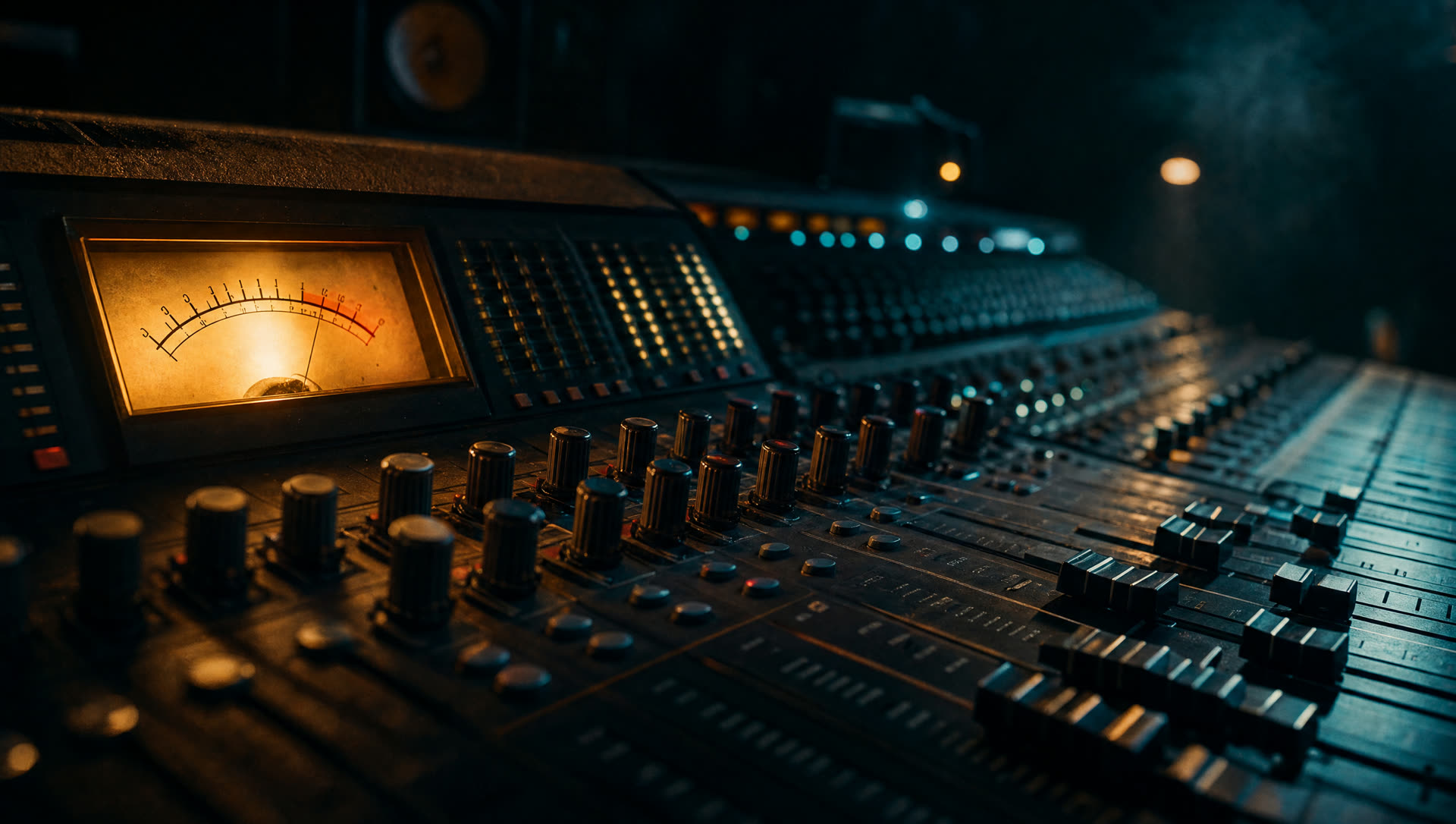
What mixing actually is
A mix starts as chaos: twenty, fifty, sometimes a hundred recorded tracks, each perfectly fine alone and collectively unlistenable. Mixing is the art of turning that pile into one coherent piece of music. Balance decides who leads and who supports, moment by moment. Equalization carves each instrument its own frequency home so the bass and the kick stop fighting, and the vocal sits in light instead of fog. Compression controls dynamics so a whispered verse and a screamed chorus live on the same record. Space - reverb, delay, panning - builds the room the song happens in: close and dry, or vast and midnight. And automation turns all of it into performance, the mix itself breathing with the arrangement. A great mix is invisible; you only notice it as the feeling that every element is exactly where it belongs.
What mastering actually is
Mastering picks up where the mix ends - one finished stereo file - and asks a different question: will this translate? On earbuds, in a car, on a club system, on the tin speaker of a phone. The mastering pass makes refined, whole-song moves: final equalization to correct tonal balance, gentle dynamics work, loudness brought to competitive, streaming-appropriate levels without crushing the life out of the track (streaming platforms normalize playback, so the loudness war is officially unwinnable - punchy beats loud). For an EP or album, mastering is also where the release becomes a body of work: songs sequenced, level-matched, and spaced so track three doesn’t ambush track two. It ends with delivery in every format the release needs, correctly encoded and tagged. If mixing is building the machine, mastering is quality control, aerodynamics, and the final coat - the last honest pair of ears before the world’s.
What they cost, honestly
Current industry surveys are consistent. Mixing: roughly $100-$250 per song at entry level, $300-$700 for experienced mid-tier professionals (the sweet spot for most independent artists), and $1,500-$3,500+ for the marquee names with major-label discographies. Mastering: about $20-$50 at entry level, $75-$100 for solid independents, $100-$300 at boutique studios, with automated services down at $5-$40. Taken together, a release-ready single realistically runs $230-$2,500 from raw stems to master, and bundling both stages with one engineer typically saves 10-30% - with a musical benefit I’ll get to below. As with scoring, the honest cost drivers are scope and standard: track count, revision rounds, and how far the record has to travel.
The AI question
Automated mastering is real, cheap, and sometimes good enough - on a clean, well-balanced mix, an algorithm can deliver a serviceable master for the price of a coffee. What it cannot do is exactly what you are paying a human for: judgment. An algorithm matches curves; it does not know the chorus needs half a decibel of air because of what the lyric means, and it cannot tell you the truth every artist eventually needs to hear - that the problem isn’t the master, it’s the mix, or the arrangement underneath it. My rule mirrors the one from my deep dive on AI and music: machines for the friction, humans for the meaning. Demos and experiments: automate freely. The release that carries your name into playlists and pitch meetings: human ears, every time.
Do you need both?
For anything released commercially - yes, both stages need to happen; the only question is who does them and how deliberately. Master-only makes sense when your mix is genuinely strong and you need translation, loudness, and formats. Mix-only (with mastering elsewhere) suits artists who want a separate final referee. And the fix-it-in-mastering fantasy deserves a plain answer: mastering polishes what exists, it cannot rebalance what doesn’t - a buried vocal is a mixing problem, and no master will excavate it. If you are unsure which stage your music needs, send it to an engineer and ask exactly that question; any honest one will tell you for free.
One engineer or two?
Tradition argues for separate mastering ears - a fresh perspective that catches what the mixer stopped hearing weeks ago. It is a fair argument, and for some records the right one. But there is a modern counter-case I practice daily: continuity of intent. Every score that leaves my studio is composed, produced, mixed, and mastered under one roof - one vision from the first sketch to the final master, nothing lost in a handoff between people who never spoke. The discipline that makes it work is borrowed from the traditionalists: time and distance. The mastering pass happens with fresh ears - days later, on different monitors, at honest volumes - so the record gets both the outsider’s objectivity and the insider’s knowledge of what every decision was for. Whichever route you choose, choose it on purpose.
How to prepare your files (and save yourself money)
Half of studio delays are file hygiene, so here is the checklist that makes any engineer love you. For mixing: labeled stems or multitracks (“Audio_37_final_v2_REAL” is a war crime), exported from zero, at the session’s native sample rate, with tuning and editing already decided. For mastering: your stereo mix with no limiter on the mix bus and roughly 3-6 dB of headroom - the engineer needs dynamic range to work with, and a pre-crushed mix ties their hands. Always include reference tracks: two or three commercial songs whose sound you are aiming at, which communicate more than any adjective. And say where the music is going - streaming, video, vinyl, sync - because the destination changes the delivery. Ten minutes of preparation routinely saves a full revision round.
Frequently asked questions
Can I just use AI mastering?
For demos and low-stakes releases, automated mastering can be serviceable on an already-clean mix. What it cannot do is make judgment calls or fix problems that actually live in the mix. For releases that represent you, human ears remain the difference.
How much headroom should I leave for mastering?
Roughly 3-6 dB, with no limiter on your mix bus. The mastering engineer needs dynamic range to work with; a pre-crushed mix ties their hands.
How long does mixing and mastering take?
A well-prepared single typically mixes in one to three days and masters in a day, including a revision round. EPs and albums scale with track count, plus sequencing time for the whole release.
What files do I get back?
At minimum a distribution-ready WAV master. Ask for the full set: streaming master, any format your distributor requires, instrumentals or clean versions if needed, and stems if you are pitching for sync.